Neurodivergent Adaptation or Universal Social Performance?
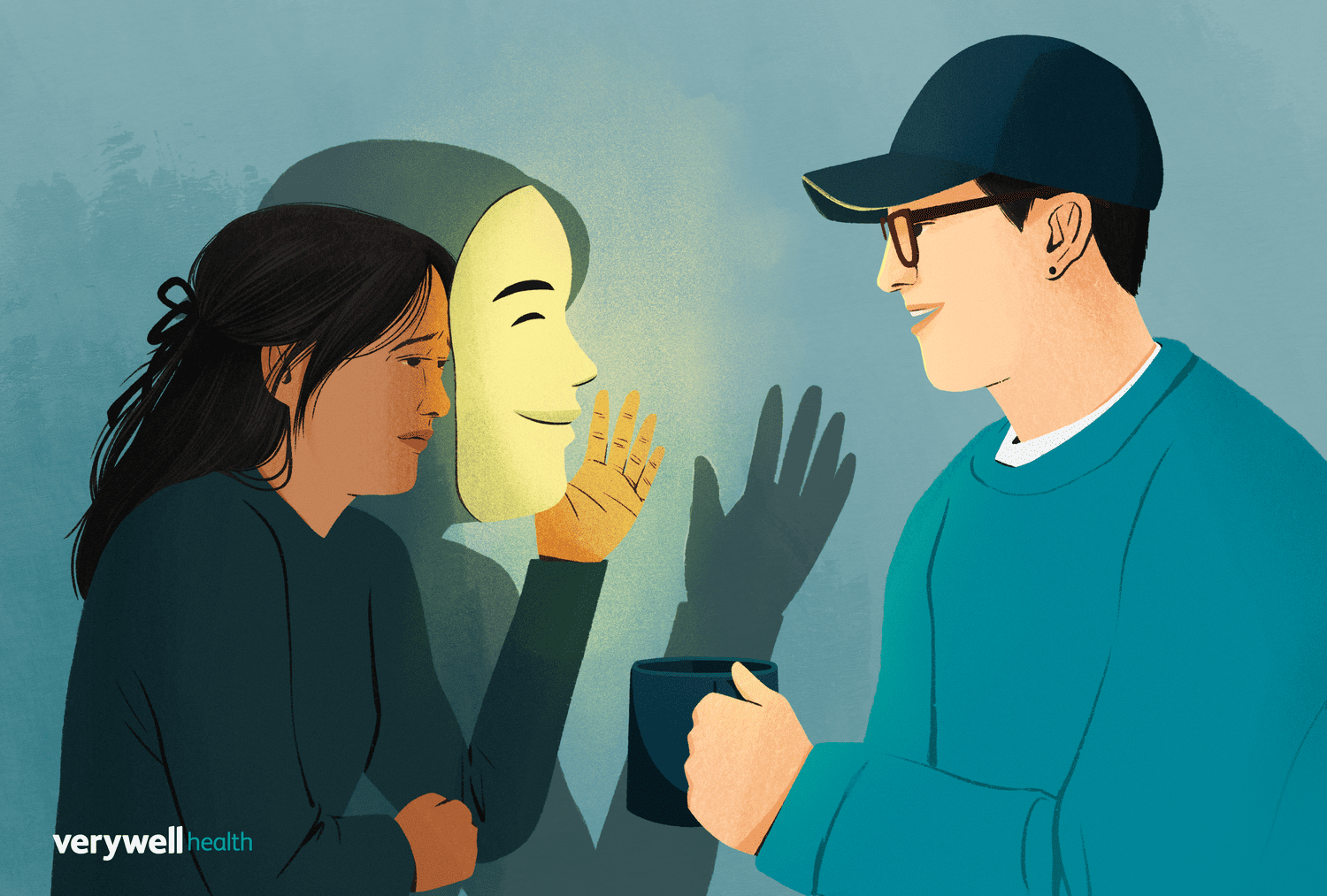
When an autistic person forces eye contact during a job interview, suppresses the urge to stim, and scripts conversation topics in advance is this fundamentally different from a neurotypical person putting on a "professional persona" at work?
Or is masking simply an intensified version of something everyone does: presenting different versions of ourselves in different social contexts?
This question sits at the heart of contemporary debates in autism and ADHD research. The answer matters not just for academic clarity, but for clinical practice, for workplace policy, and for how neurodivergent individuals understand their own experiences of exhaustion, identity, and belonging.
Drawing exclusively on peer-reviewed sources – including systematic reviews, meta-analyses, and high-impact journal articles his paper provides a full explanation of masking that integrates both psychological and sociological understandings of performative identity. It then directly addresses the critical question: is masking a distinct phenomenon, or simply "the presentation of self in different contexts"?
Defining Masking – The Current Scientific Consensus
What Is Masking?
Masking (also referred to as social camouflaging) is defined in the peer-reviewed literature as "the conscious or unconscious strategies that individuals employ to mask, assimilate, or compensate for their autistic characteristics in social settings, in order to blend in or avoid stigmatization" . These strategies include "suppression of behaviors considered atypical, imitation of neurotypical behaviors, and use of social scripts to navigate social interactions" .
The most frequently used conceptual framework, developed by Hull and colleagues and validated through subsequent research, specifies three behavioural domains :
| Masking | Hiding autistic traits and natural responses | Suppressing stimming, forcing eye contact, hiding sensory distress |
| Compensation | Behaviours used to compensate for social difficulties | Using social scripts, consciously analysing social cues, mimicking peer behaviour |
| Assimilation | Playing a social role to fit into uncomfortable environments | Adopting a "work persona," performing neurotypical social norms |
A 2025 meta-analytic review of quantification methods confirmed that the Camouflaging Autistic Traits Questionnaire (CAT-Q) and discrepancy methods are the primary validated assessment tools, with autistic individuals consistently scoring higher than neurotypical counterparts and females showing higher scores than males .
How Common Is Masking? Quantitative Evidence
A large-scale 2025 study published in Frontiers in Psychiatry surveyed 1,056 young adults (aged 18-35) with ADHD, ASD, or both (79% female) and found striking context-dependent variation in masking behaviours :
| School/Work | 83% |
| With family members | 57% |
| With neurodivergent peers | 21% |
The authors note: "The three types of masking exhibited very different distributions, with a relatively small percentage of individuals with ADHD and/or ASD masking their personalities when meeting others with the same diagnosis" .
This finding is critical: masking is not a fixed trait but a context-dependent strategy. When neurodivergent people are among others who share their neurology, the perceived need to mask drops dramatically.
The same study found that 95% of participants agreed with their diagnosis, but only 29% liked their diagnosis – suggesting that while individuals accept their neurotype, the social costs associated with it are deeply felt .
The Sociological Foundations – Goffman and the Presentation of Self
To understand whether masking is unique to neurodivergence, we must first understand what sociologists have long observed about all human social interaction.
Erving Goffman's Dramaturgical Model
In his seminal 1959 work The Presentation of Self in Everyday Life, sociologist Erving Goffman argued that all social interaction is a form of performance. Individuals engage in "impression management" the regulation of information to steer others' perceptions of the self, fostering an idealised public self-image within an interaction .
Key elements of Goffman's framework include:
- The "actor" and "audience" – Social encounters involve a performer and observers, each with expectations
- Front stage vs. back stage – People behave differently in public performance settings versus private spaces where they can drop the act
- Face – The public self-image one seeks to maintain
- Stigma – Attributes that discredit an individual and threaten their social identity
As one 2022 paper notes, "IM presupposes two parties in a social exchange; an 'actor' performs a social persona that adheres to the expectations and values of an immediate 'audience' (e.g., playing up one's competence during a job interview)" .
From this perspective, everyone masks to some degree. The neurotypical job candidate who suppresses anxiety, makes appropriate eye contact, and rehearses answers is engaging in impression management. The neurotypical person who laughs at a boss's joke they didn't find funny is performing. The teenager who acts differently with friends than with grandparents is managing impressions.
So is masking just a normal human behaviour?
The peer-reviewed answer is: yes and no. There is significant overlap, but also meaningful differences that make masking a distinct and important construct.
Resolving the Debate – What Makes Masking Different?
The Transactional Impression Management Framework
A landmark 2022 paper in Trends in Cognitive Sciences by Livingston and colleagues offers the most sophisticated resolution to this debate. They argue that autistic camouflaging should be "reconsidered under the unifying framework of impression management (IM)" – but with crucial caveats .
The authors explicitly state: "Camouflaging conceptually overlaps with ubiquitous impression management (IM) in humans, yet unique aspects exist considering autistic cognition in neurotypical contexts across motivations, neurocognition, and consequences for wellbeing" .
The key differences identified in the peer-reviewed literature are summarised below.
| Dimension | Neurotypical Impression Management | Autistic/Neurodivergent Masking |
| Primary motivation | Social advancement, relationship maintenance | Safety, stigma avoidance, survival |
| Cognitive load | Moderate; often automatic | High; requires constant conscious monitoring and calculation |
| Core challenge | Presenting desirable traits | Suppressing core traits while simulating non-native behaviours |
| Consequences of failure | Social awkwardness, missed opportunity | Exposure to stigma, discrimination, violence |
| Restorative context | Private time at home | Being with same-neurotype others (which may be rare) |
| Long-term effects | Occasional burnout | Chronic exhaustion, identity confusion, suicidality |
Motivational Differences
Conventionally, impression management is used to "enhance one's prospects at achieving interpersonal goals or pragmatic rewards (e.g., success during interviews)" . The motivations are generally approach-oriented seeking positive outcomes.
For autistic individuals, masking is often avoidance-oriented driven by the need to "mitigate thwarted belonging and stigmatized identities" . A 2023 workplace study found that masking was "employed as a strategy to safeguard against the threat of negative social and employment outcomes" . The primary driver is not "I want to impress" but "I want to avoid being rejected, fired, bullied, or harmed."
A 2024 systematic review on social camouflaging confirmed that "self-protection and desire for social connection motivate SC" but noted that for autistic individuals, the "self-protection" dimension carries far higher stakes .
Neurocognitive Differences: Why Masking Is More Exhausting
The Livingston paper synthesises predictive coding and Bayesian principles into a computational model of impression management that applies to both autistic and neurotypical people while emphasising "the distinct computational challenges faced by autistic people" .
In essence: neurotypical impression management often becomes automatic with practice. The scripts for "how to act at a party" or "how to behave in a meeting" are learned implicitly through social experience and can be executed with relatively low conscious effort.
For autistic individuals, social norms must often be explicitly calculated. The paper notes "unique computational challenges faced by autistic people in decoding social discourses and managing impressions accordingly" . Each interaction requires conscious monitoring, rule-checking, and adjustment, a process that never becomes fully automatic for many.
This explains why masking is so much more cognitively demanding. It's not simply "acting differently" – it's performing complex real-time calculations in a social environment that feels unpredictable and threatening.
The Workplace Context: Empirical Evidence of Difference
A 2023 study in PLOS ONE compared masking experiences across 285 autistic, 88 non-autistic neurodivergent, and 99 neurotypical adults in UK workplaces . Key findings:
"Workplace masking was considered by participants in all three groups to be an adaptive response to a range of socially grounded workplace challenges and was usually employed as a strategy to safeguard against the threat of negative social and employment outcomes" .
However, the study also found that "non-autistic neurodivergent and autistic participants reported experiencing unique pressures to mask, given the limited understanding of neurodiversity in workplaces and society more broadly" .
The authors conclude that while masking occurs across populations, the stakes and pressures differ systematically based on social position and the degree to which one's natural traits are stigmatised.
Consequences: When Masking Becomes Harmful
All impression management has costs. Emotional labour research has long shown that suppressing authentic emotion at work leads to burnout, depersonalisation, and feelings of inauthenticity .
However, the consequences of autistic masking are disproportionately severe. The 2024 systematic review found associations between SC and "exhaustion, identity struggles, and anxiety," as well as "generalized anxiety, social anxiety, depression, and an increased risk of lifetime suicidality" .
The Livingston paper notes: "IM is consummatory; persistent demands on cognitive resources lead to reduced physical stamina, intellectual acuity, and emotional exhaustion/burnout" . For autistic individuals who must mask for extended periods without adequate recovery time (i.e., without access to "back stage" environments where they can be authentic), these effects are magnified.
Crucially, the 2025 meta-analysis identified age as a relevant moderating factor, suggesting that the cumulative toll of masking over decades may produce worsening outcomes .
Part Four: Beyond the Individual – Ontological and Structural Perspectives
Masking as Ontological Boundary Process
A 2026 philosophical volume on neurodivergent existence offers a more radical reframing. The author argues that masking should be understood not primarily as "a psychological strategy of adaptation, but as an ontological boundary process" .
On this account:
"Masking emerges where neurodivergent modes of world-relation characterised by open, relational, and not fully objectified experiential fields must enter social orders organised through simplification, representation, and stable role structures" .
This dense formulation means: neurodivergent ways of experiencing and relating to the world are fundamentally different at the level of being not just behaviour. When these ways of being encounter social structures designed for neurotypical cognition, a boundary is created. Masking is the labour of crossing that boundary.
The author argues that psychiatric models "frequently interpret masking as a symptom of over-adaptation or exhaustion and thereby produce a structural misreading" specifically, "autistic competence, stability, or situational adaptability are often diagnostically interpreted as deception or compensation, whereas autism becomes recognisable as 'authentic' only in moments of overload, breakdown, or burnout" .
This creates an iatrogenic dynamic: "diagnostic recognition is effectively bound to visible failure" . You are only seen as "really" autistic when you can no longer mask.
The ADHD Masking Evidence Base
While masking research originated in autism studies, emerging evidence confirms that individuals with ADHD also engage in masking, with similar contextual variation.
The 2025 Frontiers in Psychiatry study found that 83% of participants with ADHD alone reported masking in school or work contexts nearly identical to the ASD group . Group differences only emerged in the context of "masking with neurodivergent peers," where ASD individuals scored higher than ADHD individuals suggesting that autistic individuals may experience even greater relief when among similar others, or may face more stigma in mixed settings.
The authors note that "masking behavior varied by context" across all diagnostic groups, reinforcing that context, not just individual diagnosis, determines masking intensity .
Part Five: A Consolidated Framework of Camouflaging Strategies
A 2025 integrative systematic review in the journal Autism consolidated findings from 28 qualitative studies involving up to 2,669 participants into a unified framework . The review identified six types of camouflaging strategies:
| Strategy Type | Description | Examples |
| Masking | Suppression of natural responses and performative adoption of alternative behaviours | Suppressing stimming, forcing eye contact, adopting personas |
| Tools for a growing repertoire | Building social skills through imitation and active training | Imitating peers, learning from media, reading social guides |
| Cognitive strategies | Conscious mental operations to navigate social situations | Scripting, modulation, mental equations for theory of mind |
| Use of others | Enlisting support from trusted individuals | Friends explaining social cues, partners initiating interactions |
| Unhealthy practices | Maladaptive coping mechanisms | Using alcohol to ease social anxiety, restrictive eating |
| Selective settings | Choosing environments that reduce masking demands | Structured groups, quieter cultures, autistic-only spaces |
The review also identified four contextual moderators that affect whether camouflaging succeeds or fails:
1. Unclear or unexpected cues – Strategies fail when social situations are unpredictable
2. Number of people – Larger groups increase cognitive load
3. Distress and overwhelm – Sensory or emotional strain disrupts strategy use
4. Duration of camouflaging – Extended masking leads to exhaustion and identity disconnection
The authors note that "some report never being able to unmask, even at home" – suggesting that for some individuals, the performance becomes so ingrained that the "back stage" disappears .
Workplace and Social Policy
The 2023 workplace study found that autistic and neurodivergent employees experience "unique pressures to mask" due to "limited understanding of neurodiversity in workplaces and society more broadly" . This points to a clear intervention: reducing stigma and increasing neurodiversity acceptance reduces the need to mask, which in turn reduces burnout and improves retention.
The systematic review of camouflaging strategies notes that "workplaces and schools can reduce the need for camouflaging by creating predictable, structured, and accepting environments" .
Both Universal And Distinct
So, is masking "just" the presentation of self in different contexts?
The peer-reviewed evidence supports a both/and conclusion.
Yes, masking shares core features with universal impression management. All humans adjust their behaviour across contexts. All humans have "front stage" and "back stage" performances. All humans manage the impressions they make on others. In this sense, Goffman was right: the self is always, to some degree, a performance.
But no, masking is not just that. For neurodivergent individuals:
- The stakes are higher – not social awkwardness but stigma, discrimination, and violence
- The cognitive load is greater – requiring explicit calculation of norms that others process automatically
- The restorative contexts are rarer – many never have access to spaces where they can fully unmask
- The consequences are more severe – chronic exhaustion, identity confusion, depression, suicidality
- The motivation is often avoidance of harm, not pursuit of gain
As Livingston and colleagues conclude: "Autistic camouflaging should be conceptualized as IM, with shared underlying constructs and computational mechanisms across humans. Yet, unique contextual, mechanistic, and outcome features exist in autistic IM experiences" .
The mask itself may be universal. But who must wear it, how tightly it must be fastened, and what happens when it slips – these are not universal at all. They are distributed along lines of power, stigma, and social position.
Understanding this distinction is not just an academic exercise. It is the difference between telling an exhausted neurodivergent person "everyone feels that way" (invalidating their specific struggle) and saying "I see that you are carrying a weight that others do not carry. Let's talk about what would need to change for you to need that mask less often."
The first response dismisses. The second opens a door.
References
1. Livingston, L. A., et al. (2022). Reconsidering autistic 'camouflaging' as transactional impression management. Trends in Cognitive Sciences, 26(7), 631-645.
2. Cancino-Barros, I., et al. (2025). A meta-analytic review of quantification methods for camouflaging behaviors in autistic and neurotypical individuals. Scientific Reports, 15, 22885.
3. Speed, T. (2026). Masking, Eigenzeit & Ontological Inoperability. Studies in World-Formation, Vol. 8.
4. Wurth, P., Fuermaier, A. B. M., Strand, A. H., & Thorell, L. B. (2025). Diagnosis acceptance, masking, and perceived benefits and challenges in adults with ADHD and ASD: associations with quality of life. Frontiers in Psychiatry, 16, 1668780.
5. Klein, J., Krahn, R., Howe, S., Lewis, J., McMorris, C., & Macoun, S. (2024). A systematic review of social camouflaging in autistic adults and youth: Implications and theory. Development and Psychopathology.
6. (2023). The workplace masking experiences of autistic, non-autistic neurodivergent and neurotypical adults in the UK. PLOS ONE, 18(9), e0290001.
7. Nel, J., Spedding, M., & Malcolm-Smith, S. (2025). Consolidating a framework of autistic camouflaging strategies: An integrative systematic review. Autism, 13623613251335472.