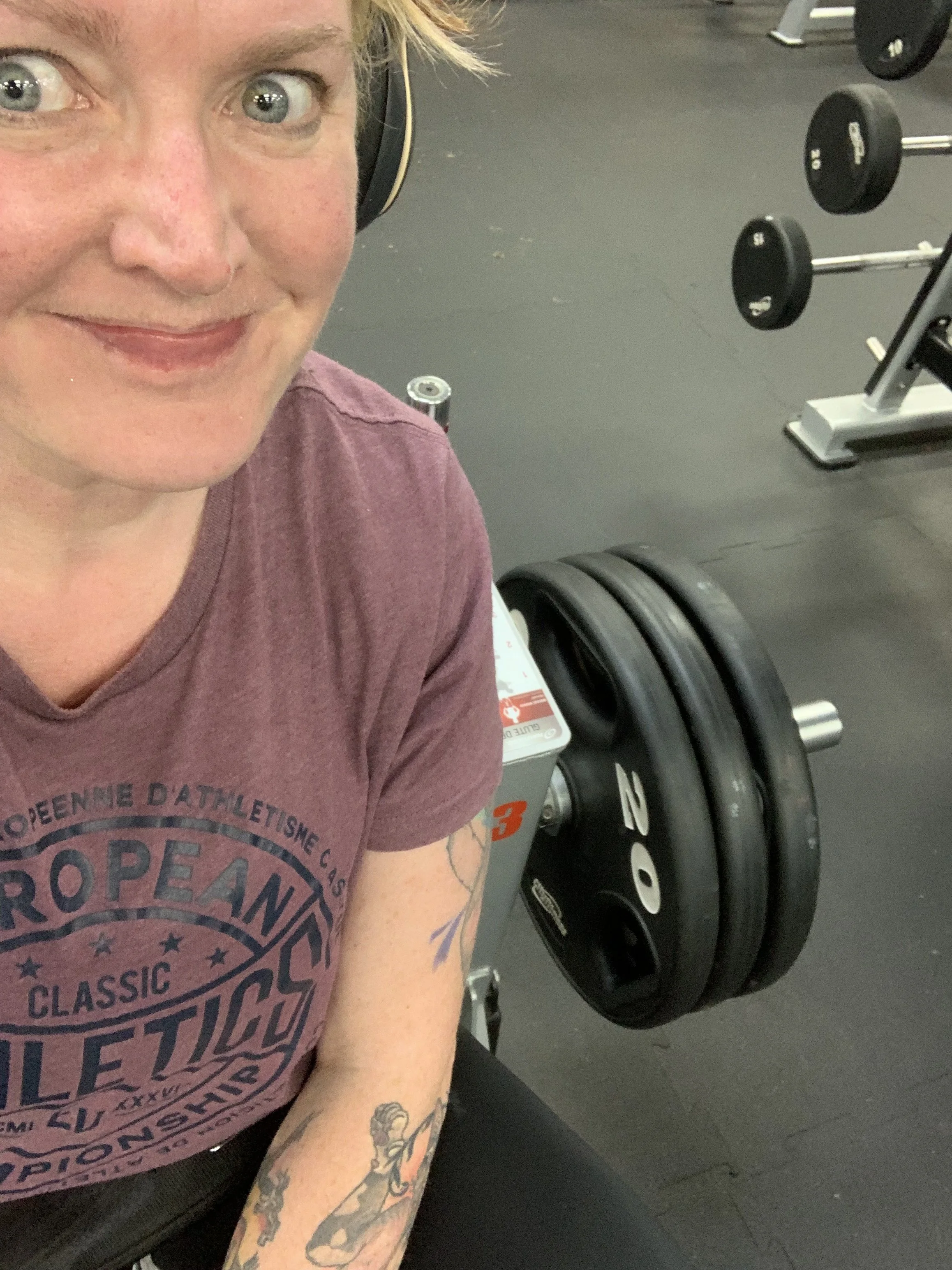
Its not about becoming jacked its about letting your body work like it is supposed to, controlled, careful movement till exhaustion of specific muscle groups is amazingly chill.
A comprehensive 2026 review published in the International Journal of Gynecology & Obstetrics (Khadilkar and colleagues) confirms what so many women experience: the hormonal shifts of menopause particularly the drop in oestrogen directly affect memory, attention, and executive function. The same review (click here) offers a clear, practical, and surprisingly powerful solution. Strength training.
Let's talk about why picking up something heavy might be one of the best things you can do for your brain.
What Happens to Your Brain When Oestrogen Drops?
Oestrogen plays a role in overall brain function. The Khadilkar review explains that oestrogen receptors are abundant in regions critical for memory and learning the prefrontal cortex, hippocampus, amygdala. When oestrogen declines, so does your brain's ability to regulate glucose metabolism, synaptic plasticity, and inflammation. The result? Slower processing, poorer verbal memory, and that frustrating "tip‑of‑the‑tongue" sensation.
The paper notes that verbal and working memory are the most significantly affected domains. You might struggle to remember names, follow multi‑step instructions, or concentrate during meetings. And because these changes can feel scary, many women worry they're heading toward dementia. The evidence reassures us: for most women, these changes are subtle and temporary. But they still deserve attention and care.
Enter Strength Training: Your Brain's Best Friend
The review dedicates a full section to exercise and cognition in menopause. It states clearly: strength training and multicomponent training (a mix of aerobic, strength, balance, and flexibility work) have a favourable impact on global cognition in older women. Specifically, these types of exercise improve:
Attention – the ability to focus without getting distracted.
Processing speed – how quickly you can take in information and respond.
Executive function – planning, organising, and juggling multiple tasks.
These are exactly the domains that menopause tends to disrupt.
The review cites a recent meta‑analysis showing that both strength training alone and multicomponent programmes lead to notable cognitive improvements. Aerobic exercise also helps it boosts cerebrovascular function and can increase hippocampal volume (that's your memory centre). But strength training has unique benefits. It directly influences metabolic health, reduces central adiposity (the belly fat that accumulates during menopause), and lowers chronic inflammation. All of these are risk factors for cognitive decline.
In other words, lifting weights doesn't just build muscle. It builds mental resilience.
What Does "Strength Training" Actually Look Like?
I know the phrase can sound intimidating. You might picture a bodybuilder grunting in a crowded gym. But strength training for menopausal women is gentle, adaptable, and deeply kind to your body. It includes:
Using resistance bands at home
Lifting hand weights (dumbbells) or kettlebells
Bodyweight exercises like squats, lunges, and push‑ups
Pilates (which the review specifically recommends for postmenopausal women, noting it improves sleep, reduces fatigue and anxiety, and thereby decreases cognitive deterioration)
The key is consistency, not intensity. The World Health Organization (cited in the paper) recommends that adults over 65 engage in 150 minutes of moderate or 75 minutes of vigorous aerobic activity per week, plus two or more days of muscle‑strengthening activity. You can start with just 15 minutes once a week and gradually build up. The review notes that a mixed regime of strength and aerobic exercises, increasing to 45 minutes per week over six months, can decrease the risk of global cognitive decline.
That's it. That's the kindest, most evidence‑based prescription you'll ever get.
Beyond the Brain: How Strength Training Helps Your Whole Menopausal Self
The benefits don't stop at cognition. Strength training also:
Improves sleep quality – fewer night sweats and restless hours.
Stabilises mood – reduces anxiety and the irritability that comes with hormonal fluctuations.
Protects your heart – oestrogen loss increases cardiovascular risk; strength training counters that.
Maintains bone density – reducing fracture risk as you age.
Helps manage weight – counteracting the metabolic slowdown that often accompanies menopause.
The Khadilkar review emphasises that addressing modifiable risk factors like hypertension, obesity, and sedentary behaviour is crucial to prevent cognitive decline. Strength training tackles all three.
A Gentle Reminder: Start Where You Are
You don't need a gym membership or fancy equipment. You don't need to train like an athlete. You need to move your body in ways that feel good and sustainable. That might be:
Two weekly sessions of lifting light weights at home while listening to a podcast.
A Pilates class with other women who get it.
A short walk followed by a few squats and wall push‑ups.
The most important thing is to start. And to be patient with yourself. Some days your brain will still feel foggy. Some days you won't want to move. That's okay. Kindness—self‑care—isn't about perfection. It's about showing up for yourself, again and again, with the same warmth you'd offer a friend.
Bringing It All Together
Strength training isn't just about muscles; it's about memory, mood, and mental clarity. It's one of the most effective, non‑medical ways to support yourself through this transition.
So next time you feel that fog roll in, consider picking up a weight. Not to punish your body. Not to chase a certain shape. But as an act of care. As a way of telling yourself: I am still here. I am still capable. And I am worth showing up for.
If you'd like to learn more about how to integrate strength training into your menopause journey or if you're struggling with the overwhelm and could use some psychological support to get moving I'd love to help. Reach out. We'll figure it out together.