When Menopause Meets ADHD: Why You Deserve More Than Just “Understanding”
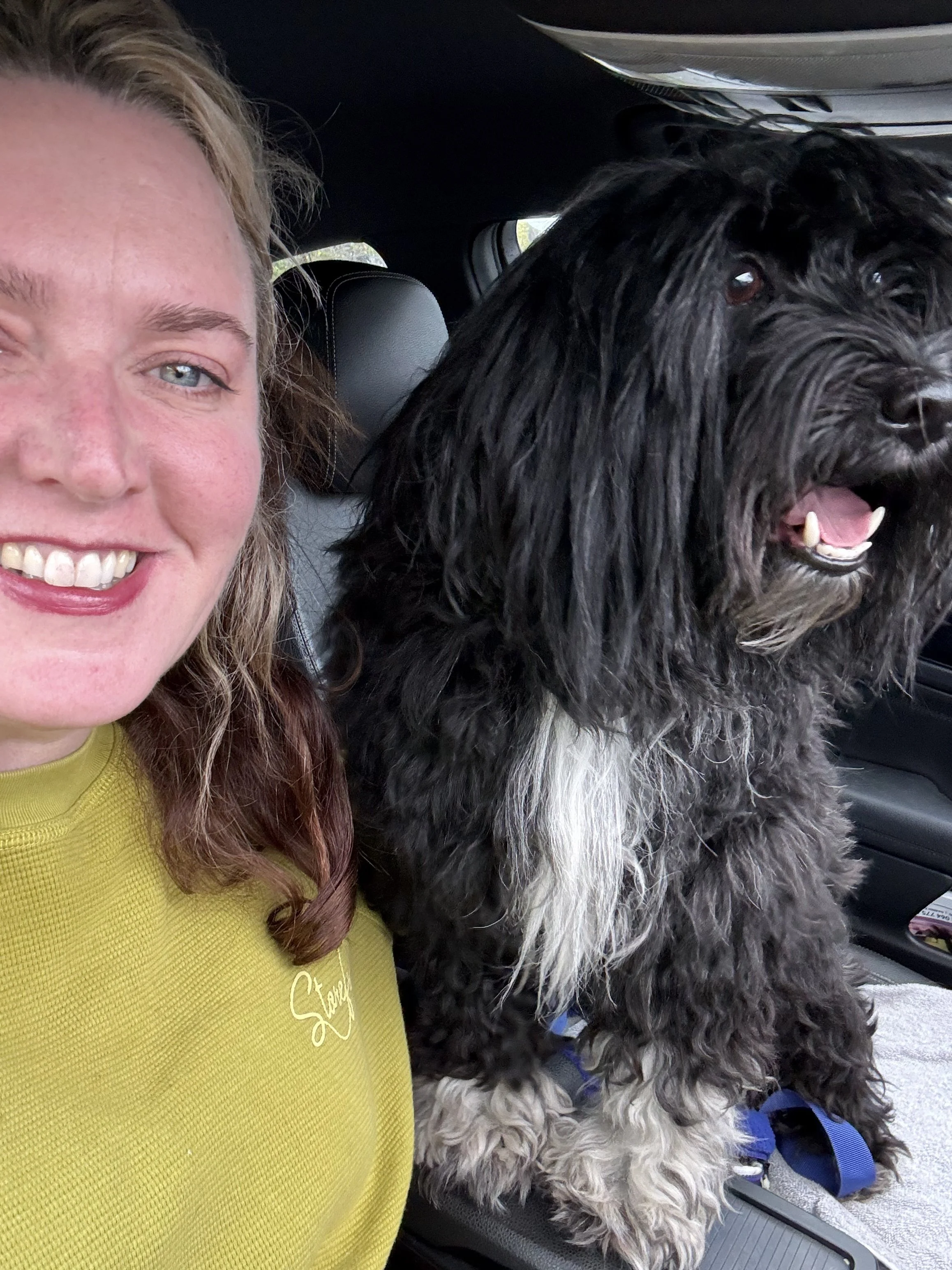
Advise from me, support from Shadow :)
If you’re navigating perimenopause or menopause and you also have ADHD, you might feel like your brain and your body are speaking two different languages and no one gave you a translator.
Hot flushes interrupt your focus, brain fog makes your executive function feel like it’s on strike, and the emotional ups and downs can crank up rejection sensitivity to eleven. Then, on top of all that, you might look around and wonder: Why does it feel so lonely? Why doesn’t my partner seem to get it? Why do I feel like I’m failing?
A recent study published in Feminism & Psychology (Hayfield, Moore, & Terry, 2024) gives voice to exactly these kinds of experiences. As a psychologist who specialises in ADHD (and who has ADHD myself), I read this paper and thought: This is it. This is what so many of my clients are living through but with the added layer of a neurodivergent brain.
Let me walk you through what the research found, why it matters for ADHDers, and how the right support can make all the difference.
The “Menopause Sisterhood” – And What Happens When You Don’t Fit
The researchers talked to 71 women going through perimenopause and menopause, asking about their friendships, family, and relationships. One of the most beautiful themes was what they called the “menopause sisterhood” those connections with other women who were also in the thick of it. Women found comfort in sharing experiences with colleagues, gym buddies, or friends who got it because they were living it too. It normalised the chaos and made them feel less alone.
But here’s the catch: the sisterhood was built on shared embodied experiences. If your symptoms were more psychological than physical if you struggled with hormonal depression, anxiety, or brain fog instead of hot flushes you often felt left out. One participant said, “I didn’t connect with anyone who’d experienced hormonal depression. I felt very isolated, not seen, and unheard.”
Sound familiar? For women with ADHD, the psychological symptoms of menopause can hit harder. Already prone to emotional dysregulation, executive dysfunction, and a noisy inner world. Add plummeting oestrogen, which affects dopamine, and you’ve got a recipe for feeling like your brain has left the building. And when the conversation around menopause focuses mainly on physical symptoms, it’s easy to feel like your experience doesn’t “count.”
Partners, “Heroes”, and the Weight of Self‑Blame
The study also looked at partner relationships, mostly with male partners. Some women described partners as wonderfully understanding even “heroic.” Others dealt with partners who were dismissive, clueless, or blamed them for things like loss of sexual desire. But what struck me most was how often the women blamed themselves. They felt guilty for not wanting sex, guilty for being irritable, guilty for “letting their partner down.”
This pattern is so common in my ADHD clients too. We’re already socialised to apologise for our symptoms; add menopause into the mix, and the shame spiral can become overwhelming.
The researchers noted that even when partners were unsupportive, women often excused them with narratives like “men will never understand.” It’s a way of letting them off the hook but it leaves you carrying the burden alone.
So What Actually Helps? Interventions That Work
This is where my heart lights up. The research shows that what women crave is validation and shared understanding. They want someone to say, “Yes, this is real, and you’re not crazy.” They want practical tools to navigate the chaos without losing their relationships or themselves.
For women with ADHD, that validation needs to go a step further. We need interventions that:
Acknowledge the whole picture not just hot flushes, but brain fog, emotional whiplash, and the way executive function can go offline.
Meet us where we are no shame, no “just relax” advice. We need active, doable strategies that work with our ADHD wiring.
Involve partners in a way that’s constructive helping them understand without turning them into “heroes” or excusing dismissive behaviour.
Build connection because isolation makes everything worse, but finding your people can be hard when you feel “different.”
Why I Love Working With ADHD & Menopause (And Why You’ll Love Working With Me)
I’m a psychologist with ADHD, and I love helping people just like you. I know what it’s like to feel like your brain is betraying you, to struggle with rumination, to wonder if you’re “too much” for the people you love.
One of my favourite tools to use with clients is something I call “dipping in and out of the river.” It’s a practical, gentle way to break the cycle of worrying, obsessing, and getting lost in your thoughts something that both ADHD and menopause can throw into overdrive. Instead of trying to passively watch your thoughts (which is nearly impossible when your mind is a raging river), we practice dipping in and then dipping back out. You learn that you can get swept away, but you also learn that you always have the choice to come back to the present moment. It’s simple, but it’s transformative.
I also bring a deep understanding of how hormones, neurobiology, and life stage all intersect. We’ll talk about your brain, your body, your relationships and we’ll do it without pathologising you. My goal is to help you feel seen, supported, and equipped with strategies that actually fit your life.
You’re Not Broken. You’re in Transition.
If you’re reading this and feeling overwhelmed, please know: you are not alone, and you are not failing. The research confirms what I see every day: menopause is a time when relationships are tested, when we crave understanding, and when we often end up being hardest on ourselves. Add ADHD into the mix, and the struggle is real.
But it doesn’t have to be a lonely struggle. There are interventions that work. There are people who get it. And there is a way forward that honours your experience without making you feel like you have to shrink yourself.
If you’re ready to stop feeling like you’re at the mercy of your thoughts and start finding solid ground, I’d love to work with you. Reach out, and let’s find the riverbank together.